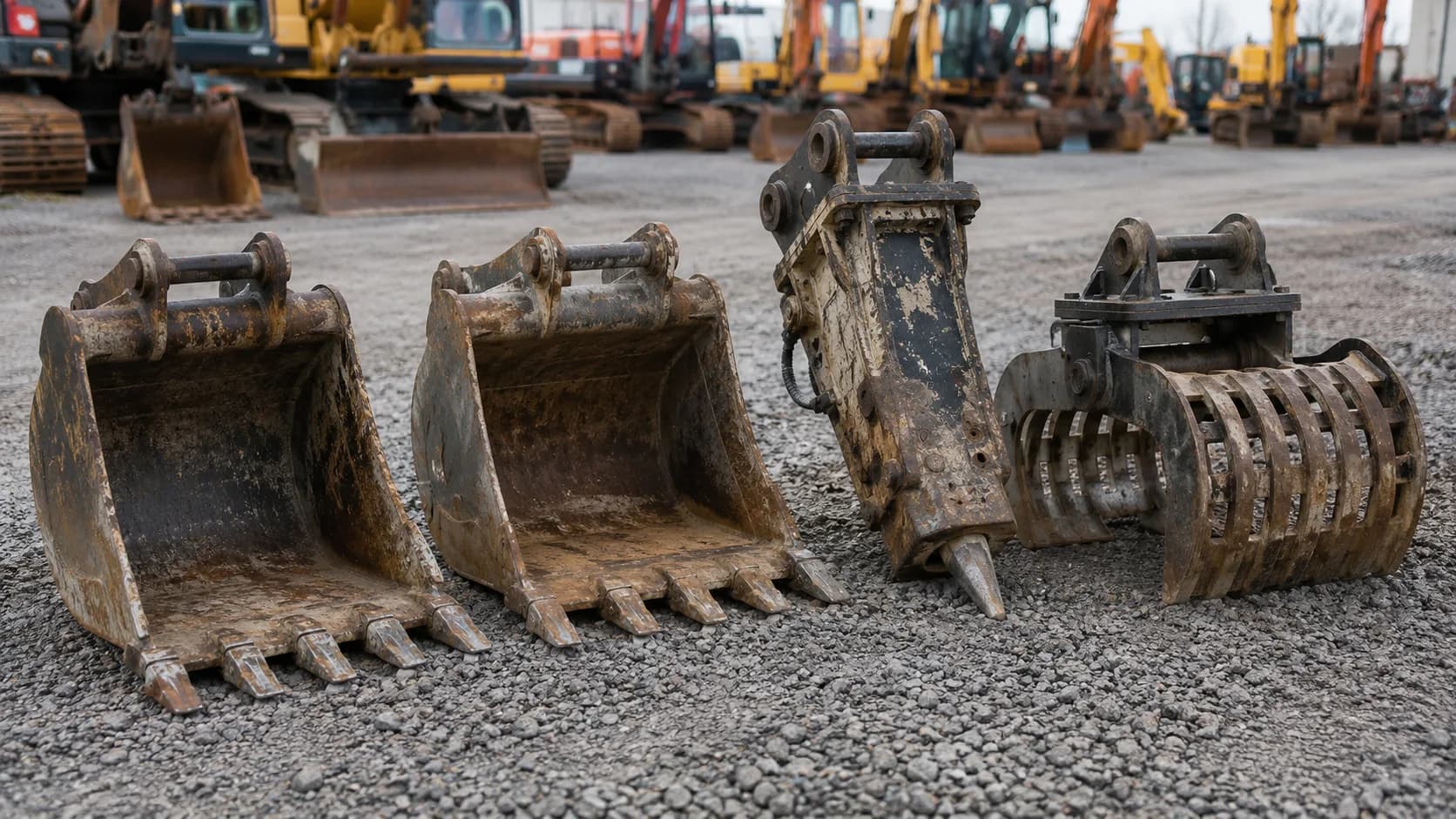
A used machine usually dodges the U.S. steel tariff — but the steel-heavy parts that wear out and get replaced don’t always. As of mid-2026, that split is quietly pushing up the cost of buckets, blades and wear parts, and it’s worth understanding before you price your next attachment or rebuild.
A dated note: tariff scope and methodology are still moving in 2026 — confirm the current treatment for your exact part with a customs broker. For the buyer’s customs overview, see cross-border equipment shipping.
The tariff doesn’t see “an excavator.” It sees a classification — and a steel bucket and a whole machine are classified very differently.
Whole machines vs parts
The Section 232 tariff on steel and aluminum is 50%, and Canada lost its exemption in March 2025. But it applies to steel/aluminum articles and a listed set of “derivative” products — not whole machines. A complete used excavator sits under its own machinery heading and generally isn’t hit. The steel parts and attachments bolted to it are a different story.
What is actually in scope
Commerce has added construction-equipment parts and attachments to the steel derivative list — think bulldozer blades and loader/backhoe attachments. So the components most likely to carry a tariff are exactly the ones that wear out and get replaced. And the way the duty is calculated shifted in 2026: for in-scope derivatives the tariff moved toward the full customs value rather than only the steel content — a meaningful jump on a steel-heavy part. The lists and rules change often, so the specific treatment of any one part has to be confirmed.
Why prices are moving
- New parts carry the tariff. A new imported steel attachment or wear part in scope can land with the duty baked into its price.
- The machine itself is spared. So the tariff pressure shows up unevenly — on the consumables, not the unit.
- Used attachments look better. When new wear parts get pricier, a sound used bucket, blade or breaker is a more attractive buy — if it actually fits and isn’t worn out.
How to buy smart
The tariff makes the basics matter more, not less. A used attachment is only a saving if it mounts, runs within your machine’s hydraulics, and has real wear life left.
- Get fitment right. Weight class, hydraulic flow and pressure, and the coupler/pin interface — a mismatch is a total loss.
- Inspect the wear hard. Cutting edges, tool steel, pins and cylinders decide whether the price is a deal or deferred cost.
- Use the full checklist. Our guide on buying used attachments covers fitment, coupler safety and the per-family wear points.
Sources & references
Last updated .