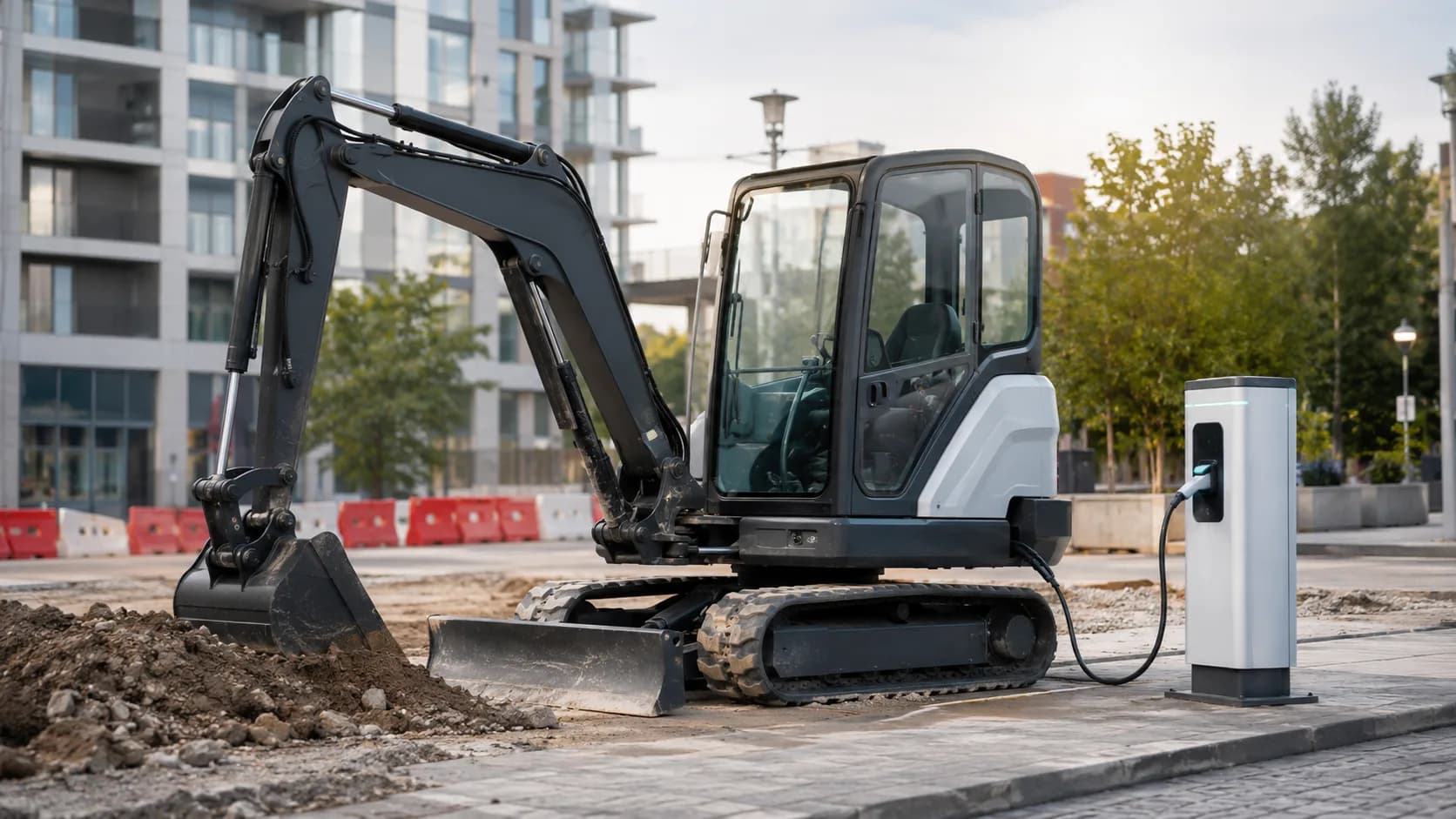
The pitch for electric and autonomous equipment is everywhere; the question for a working fleet is narrower: can it do the job today, and does the math work? As of 2026, the honest answer is “in specific places, yes — everywhere else, not yet.” Here’s the status check, without the hype.
Match the technology to the duty cycle, not the headline. A compact electric machine on an urban site is a smart buy; a battery machine on a remote single-shift earthmoving job is a charging problem.
Electric: what’s really shipping
Battery-electric machines are genuinely available now — concentrated in the compact classes. Real, shipping examples include the Volvo CE ECR25 Electric mini excavator, the Bobcat T7X all-electric track loader, JCB’s E-Tech compact range, and Develon’s new electric excavator line. At the larger end, the Volvo EC230 Electric (a ~23-tonne class excavator) shows the technology scaling up — but that’s also where the limits start.
The practical realities
- Runtime is the constraint. Most electric excavators and loaders deliver roughly 4–5 hours of heavy continuous use per charge; the bigger quoted numbers assume light or intermittent duty. A full shift of hard digging still means planning around charging.
- Charging is an infrastructure cost. Fast charging can refill a large pack in ~80–90 minutes, but the real budget line is machine plus charger plus the site power to feed it.
- The price premium is real. Trade reporting puts the electric upfront premium at roughly 40%–100% over diesel, narrowing as battery costs fall.
- Where it makes sense today: compact machines for indoor, urban, noise-sensitive and low-emission-zone work. Where it doesn’t yet: remote sites and long, heavy, single-shift earthmoving where charging downtime kills utilization.
Autonomy: mining vs construction
This is where the hype and the reality diverge most. Autonomous haulage is real and deployed — in mining. Komatsu’s FrontRunner program reached its 1,000th commissioned autonomous haul truck in April 2026, and Caterpillar’s Command for Hauling is scaling toward 2,000+ trucks by 2030 and expanding into quarries. But for general construction, what you can actually buy is operator-assist — automated blade and grade control, steer assist, stable-blade features — not a driverless dozer. Real productivity gains, but a human is still in the seat.
The used-electric question
Here’s the honest gap: there isn’t a used-resale track record for electric construction equipment yet — the machines are too new. Anyone quoting a confident used-electric resale value is guessing. If you’re considering a used electric machine, weigh the things that will drive its value: remaining battery warranty, battery state-of-health from telematics, charger compatibility, and the cost of an eventual battery replacement. Those norms are still borrowed from passenger EVs, not proven on heavy iron.
The honest verdict
Electric is a genuine buy today for the right compact, urban or low-emission duty cycle. For most heavy, remote or long-shift work, proven diesel iron still wins on uptime and resale certainty — and that’s a defensible choice, not a backward one. Autonomy beyond operator-assist remains a mining story for now. Buy for the work in front of you, and when you do go used, apply the same discipline as any machine: see our guide to buying used heavy equipment.
Sources & references
- Volvo CE — ECR25 Electric specifications (20 kWh, ~4 h runtime)
- Volvo CE — EC230 Electric specifications (264 kWh, ~4–5 h)
- Compact Equipment — Bobcat T7X all-electric track loader (70 kWh, ~4 h; Aug 9, 2024)
- Charged EVs — Develon launches electric excavator range (Dec 12, 2025)
- Mining.com — Komatsu commissions 1,000th autonomous haul truck (April 21, 2026)
- International Mining — Caterpillar targets 2,000+ autonomous trucks by 2030 (Nov 7, 2025)
- For Construction Pros — challenges & benefits of moving to electric equipment (price premium)
Last updated .