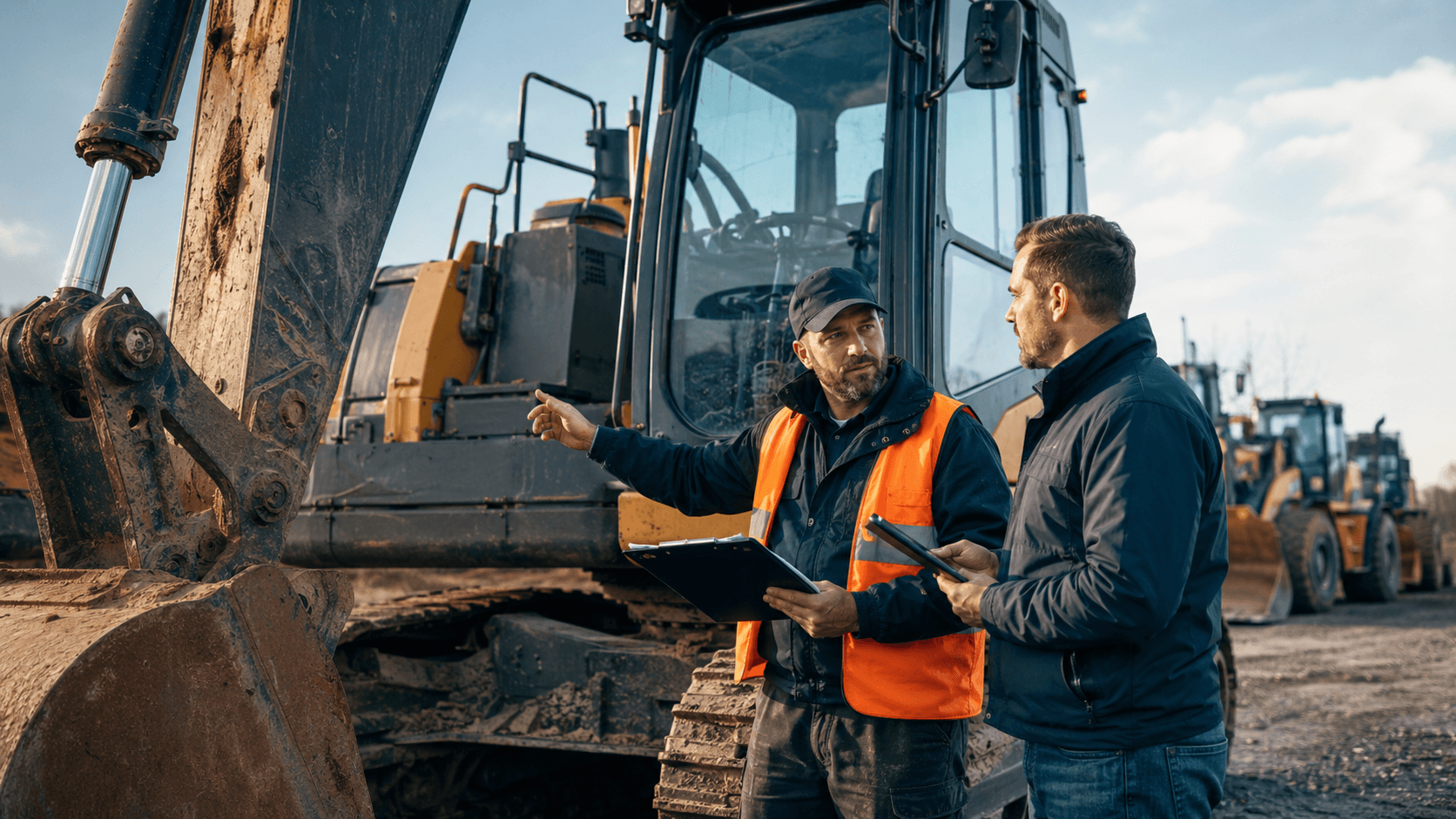
The fastest way to kill a good used-equipment deal is to fall in love with a machine before you understand it. The second fastest is to negotiate hard on a unit you were never going to be able to finance or move. A clean purchase is mostly process: verify the machine, verify the seller, line up the money and the transport, and only then make the offer. Here is the order that keeps deals alive.
A clean purchase is mostly process: verify the machine, verify the seller, line up the money and the transport, and only then make the offer.
Hours tell you less than you think
Operating hours are the first number everyone looks at, and the most overrated one in isolation. A machine with high hours and complete service history can be a far safer buy than a low-hour unit that sat in a yard, ran hot, or was run by an operator who skipped intervals. Hours set expectations; condition and records decide the deal.
Read hours against the machine’s job. A dozer that lived on a quarry floor wears differently from one that did finish grading. Ask what the machine actually did, then look for wear that matches — or contradicts — that story.
The walkaround: where used machines actually fail
Most expensive surprises come from a short list of systems. Walk every one, and bring someone who knows the machine class if you don’t. On a serious purchase, don’t stop at your own eyes — commission an independent mechanic to inspect the machine and, ideally, order your own oil and fluid analysis rather than relying only on the seller’s. OEM fluid-analysis programs such as Komatsu’s KOWA and John Deere’s fluid analysis test engine oil, hydraulic fluid and powertrain lubricants for wear metals, moisture and contaminants — the point being to catch a minor problem before it becomes a major failure. A few hundred dollars of inspection is cheap insurance against a five-figure repair.
- Undercarriage (tracked machines). Often the single biggest deferred cost on excavators and dozers. Check rails, rollers, idlers, sprockets and pin-and-bushing wear. A worn undercarriage can run into five figures on a mid-size machine.
- Hydraulics. Look for weeping cylinders, swollen or chafed hoses, and cycle the functions — drift, hesitation, or noise under load are warnings. Check for milky or burnt fluid.
- Engine & fluids. Cold-start it yourself. Watch the exhaust, listen for knocks, and ask for recent oil-analysis results if the seller does fluid sampling.
- Frame, welds & structure. Re-welds, cracks near pivot points, and patched frames hint at a hard life or a past failure. Look under the dirt.
- Attachments & wear parts. Buckets, edges, couplers and pins are cheap to overlook and not cheap to replace.
Read the records — and verify the serial
Service records are worth more than a fresh coat of paint. Ask for the maintenance history, major repairs, and how the machine was stored. Match the serial number on the machine to the paperwork, and confirm the seller actually has clear title to sell.
A lien you didn’t check for is a deal that dies at the bank — or worse, a machine a lender can repossess after you’ve paid. Search the public lien registry before money moves. In the United States, a lender perfects its security interest by filing a UCC-1 financing statement, usually with the secretary of state in the debtor’s state — a public, searchable record. In Canada, run a Personal Property Security Act search: Ontario’s registry or B.C.’s Personal Property Registry will show any security interest registered against the machine. B.C.’s own guidance is blunt: make sure personal property doesn’t already have liens registered against it before you buy privately.
Vet the seller before the machine
A great machine from a seller who can’t produce records, won’t allow an inspection, or pressures you to wire a deposit is not a great deal. Buying through a marketplace that reviews listings for accuracy, photos and seller legitimacy removes a large category of risk before you ever schedule a viewing.
Know your number before you fall in love
Shop with a budget, not a wish. Working out what a machine costs per month — price, down payment and term — turns an abstract sticker into a decision you can actually make, and getting pre-qualified means you negotiate as a buyer who can close. Sellers take a financing-ready buyer more seriously, which is leverage in your favour.
Factor transport into the real price
The number that matters is the landed cost, not the listing price. A machine three provinces away can still be the right buy — but only if you price the move in before you negotiate. Dimensions, weight, whether it loads under its own power, permits and route all shape the quote, so get a realistic transport number early instead of discovering it after you’ve committed.
Before you agree on a price, get clear on what the haul actually involves:
- Check the route end to end. Bridge clearances, weight-restricted roads, seasonal load limits and tight jobsite access can force a longer route — or a different trailer.
- Is it a wide load? Loaded on a trailer, many machines exceed the standard legal limits and tip the move into oversize/overweight territory, which triggers a permit. In the U.S., the federal no-permit ceilings are 8.5 feet (102 inches) wide and 80,000 lb gross; in Canada the standard width is narrower — Ontario, for example, caps a load at 2.6 metres wide and 4.15 metres high before a permit is needed.
- Will a pilot (escort) vehicle be required? Past certain dimensions, jurisdictions mandate pilot cars — sometimes a police escort — and that cost is real. The thresholds vary widely by state and province: Washington requires two escorts on a two-lane highway once a load is wider than 11 feet, while Ontario requires an escort from 4.0 metres wide. Confirm the rule for your specific route — don’t assume.
A heavy-haul quote that accounts for all of this is the only honest version of the price.
Making the offer
Now you can negotiate from strength: you know the machine’s real condition, you’ve verified the seller and the title, you know your monthly number, and you know what it costs to get it home. Put the inspection findings to work — documented wear is a fair basis for price, not a reason to walk. Agree terms in writing, confirm how and when title transfers, and keep the deposit and payment inside a channel you trust.
Do the boring parts in order and the deal mostly closes itself. Skip them, and you find out what you missed after the money has moved.
Sources & references
- Komatsu Oil & Wear Analysis (KOWA) — what fluid analysis tests for
- John Deere Fluid Analysis — universal test kit (engine, hydraulic, powertrain)
- FHWA — federal truck size & weight limits (102 in width, 80,000 lb GVW)
- Ontario — guide to oversize/overweight vehicles and loads
- Washington State — escort vehicle requirements (WAC 468-38-100)
- U.S. UCC §9-310 — perfection of a security interest by filing (UCC-1)
- Ontario — register or search a lien (Personal Property Security Registration)
- British Columbia — Personal Property Registry (search liens before you buy)
Last updated .