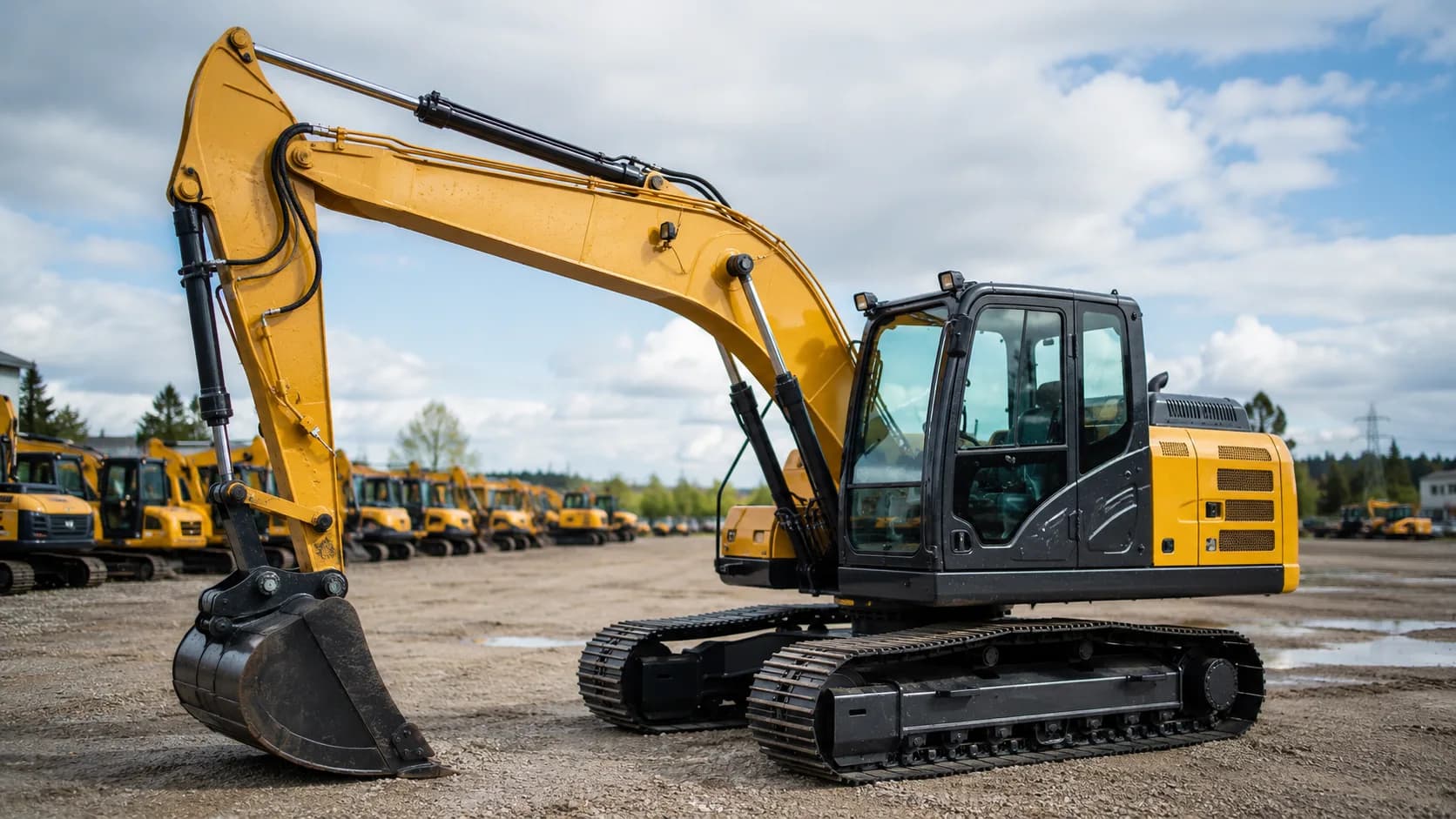
A machine sells faster and for more when the buyer has nothing to worry about. Most of the money lost on a private sale isn’t lost on the asking price — it’s knocked off by the doubts a seller left in place: a dirty machine, missing records, an unexplained leak, a lien nobody mentioned. The prep below removes those doubts before you publish, so the listing competes on the machine’s real merits.
You are not just selling a machine — you are selling certainty. Every record, honest photo and cleared lien is one less reason for a buyer to discount your price.
Clean it, fix the cheap things, and service it
A clean, well-presented machine signals an owner who looked after it — Ritchie Bros. notes that a clean, well-maintained machine a buyer can put straight to work earns extra bids, and recommends replacing broken glass, removing old decals, swapping dead batteries and making minor repairs.
- Wash and detail. Pressure-wash the body, tracks/undercarriage and engine bay so the machine photographs well and inspects honestly.
- Fix the easy cosmetics. Glass, lights, mirrors, a torn seat, dead batteries — cheap to address, expensive to leave as a buyer’s first impression.
- Service it and stop the leaks. Top up or change fluids and address visible leaks; an active leak is an immediate red flag that depresses offers and fails inspections.
Assemble the records and a fluid-analysis history
Documentation is what turns your claims into evidence. Detailed, dated records of services and repairs give buyers a clearer sense of risk and support a higher price; gaps introduce uncertainty that costs you money.
- Collect the full history. Oil and filter changes, undercarriage service, parts and any major component rebuilds — with dates and invoices.
- Add a fluid sample. A scheduled oil-sampling report documents internal engine, hydraulic and drivetrain condition and helps support resale value — a clean, trending report is one of the cheapest pieces of reassurance you can hand a buyer.
- Export the telematics. If the machine reports, a usage/hours history gives a remote buyer a fuller machine history and backs up your stated hours.
Verify the serial/PIN, ownership and any lien
A buyer will check that you can actually sell the machine free and clear — so get ahead of it. Many buyers run the PIN against a theft and ownership database such as the National Equipment Register, so the details need to line up.
- Locate and confirm the PIN/serial. Find the plate (and the frame stamping) in the right place for your machine type and make sure it matches the year/model you advertise.
- Gather ownership documents. Proof of ownership and the prior bill of sale, ready to show, with the PIN on the bill of sale at transfer.
- Resolve or disclose a lien. A registered security interest must be paid out and discharged, or the payoff coordinated from sale proceeds at closing. In the U.S., after payoff the lender files a UCC-3 termination; in Canada, registrations live under each province’s Personal Property Registry (PPSA), where the secured party provides a payout and discharges the registration.
Photograph honestly — and completely
Photos are how a remote buyer inspects your machine, so shoot a generous, honest set. Ritchie Bros. guidance recommends documenting the undercarriage, engine compartment and cab and a thorough set of detailed images.
- Shoot the proof shots. A clearly legible hour meter and serial plate, the engine bay, hydraulic lines, cylinder rods, pins, undercarriage or tires, and attachment faces.
- Use good light and many angles. Soft daylight, high and low angles, and wide plus close-up shots so nothing looks hidden.
- Always photograph the damage. Hiding a defect destroys trust and causes post-sale disputes — showing it builds the credibility that lets a buyer commit.
Write an honest description and disclose known issues
Make the listing the document a serious buyer needs. State make, model, year, hours and configuration; note recent replacements (tires, undercarriage, major components); and confirm every included attachment — Ritchie Bros. warns that unexplained missing attachments can make a machine sell for less. Then disclose the known issues up front: documenting condition and disclosures protects you and heads off the disputes that sink a sale at handover.
Set a defensible price from comparables
Price from what similar machines actually sell for, not a depreciation formula — the real resale price depends on current market conditions and machine-specific details. Pull recent auction and resale comps for your exact model, year and hour range, and let the records and condition you documented justify the top of that range. Our guide to estimating a machine’s value walks through the comps approach in detail.
Get inspection- and transport-ready
The last step is removing the friction that stalls a deal once a buyer is interested.
- Consider a third-party inspection. A pre-listing inspection report gives a remote buyer the confidence to bid without traveling.
- Be transport-ready. Know the dimensions and weight, note whether it runs/drives, and be ready for loadout — a shipping plan keeps distance from killing an otherwise good sale.
- Plan viewings and loadout. They take real time; deciding how you’ll handle them up front keeps a motivated buyer moving.
Sources & references
- Ritchie Bros. — How to maintain the resale value of your heavy equipment
- Equipment Trader — How to document service history when selling equipment
- Ring Power — Scheduled Oil Sampling (S·O·S) fluid analysis
- ConEquip — Locating a serial number on your construction equipment
- National Equipment Register — IRONcheck (theft & ownership history buyers run)
- National Funding — How to clear assets from a UCC lien (UCC-3 termination)
- Province of BC — Personal Property Registry (PPSA liens & discharge, Canada)
- EquipmentWatch — Values & market data (auction/resale comps)
- For Construction Pros — Telematics is transforming equipment recordkeeping & resale
Last updated .