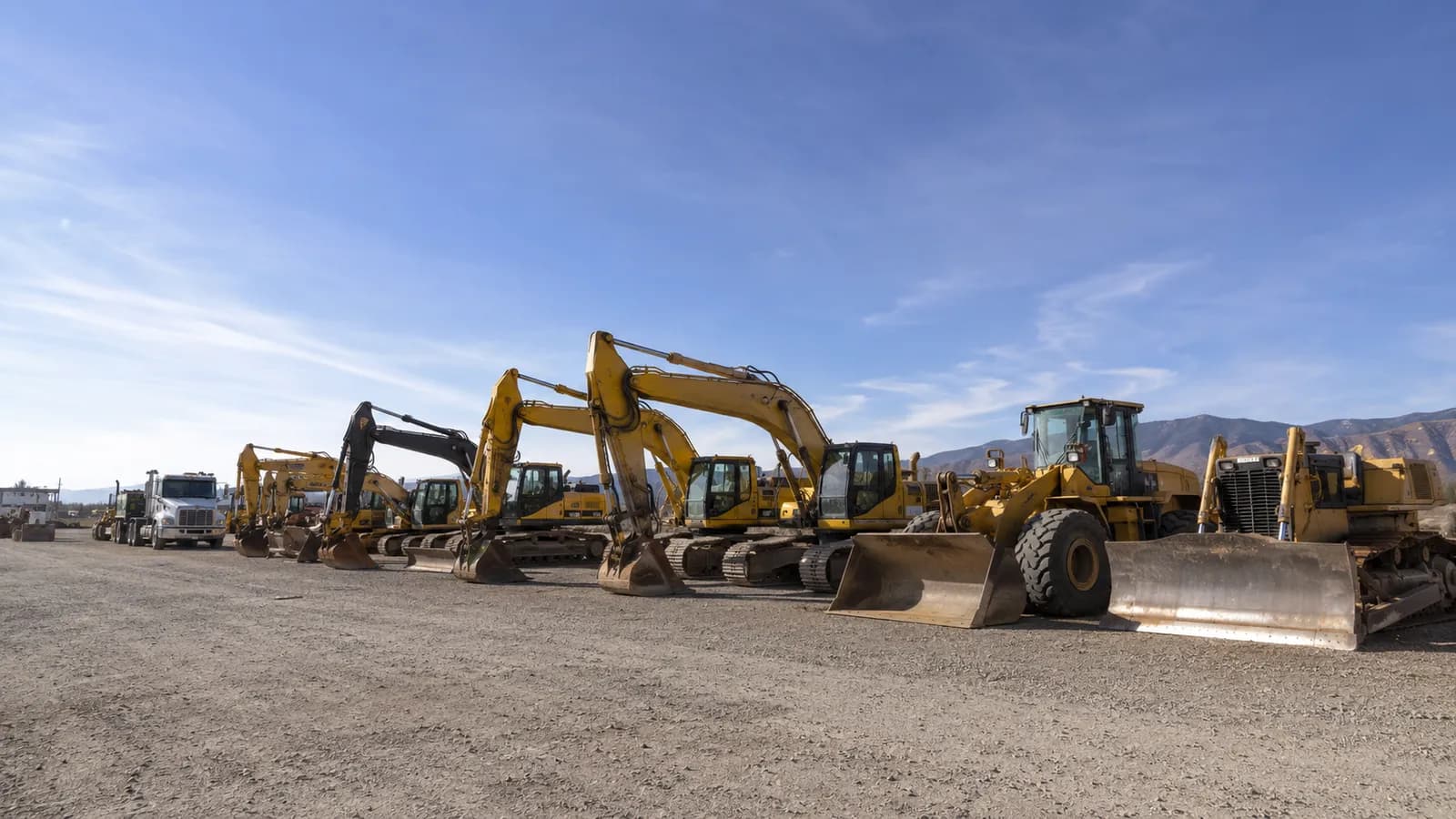
We publish realized auction prices on our Market Trends page — the actual hammer prices machines sold for across North America, not what someone asked. It’s the most honest single read on the used market, but only if you know what the number is and what it isn’t. Here’s what mid-2026 looks like, and how to use it without fooling yourself.
A realized auction median tells you where the market cleared — a wholesale benchmark. It is not retail, it is not an asking price, and it is not the worth of your specific machine. Those are three different numbers.
What a realized auction price actually is
When a machine sells at auction, that price is real: a willing buyer paid it on the day, in a competitive sale, often against a deadline. Take the middle (median) of enough of those and you get a credible market-clearing figure for that class. That’s its strength — it’s what changed hands, not a wish.
But auction is the wholesale end of the market. The same machine usually carries a higher dealer-retail asking price, and a private-party sale typically lands somewhere between the two. So an auction median is best read as a floor / benchmark: what the machine is worth to a trade buyer today, before retail margin, reconditioning or a warranty. Keep that frame and the number is genuinely useful; forget it and you’ll under-price a clean retail unit or over-trust a wholesale figure.
What mid-2026 auction prices show
The direction first: used values have drifted down by low single digits year-over-year while inventory stays tight (Sandhills, May 2026 data), even as construction demand holds — starts rose 9% in April. Soft prices, thin supply, steady demand: a slowly narrowing buyer’s window.
As a directional snapshot, here’s roughly where Canadian auction medians have been sitting in mid-2026 (realized sale prices, in CAD — the live page has the current number, range and sample size for each):
- Full-size excavators — roughly the high-$40Ks to ~$70K, by size and hours; mini excavators closer to $30–40K.
- Crawler dozers — about $80–100K for common mid-size units.
- Wheel loaders — around $50–60K.
- Skid steers & compact track loaders — roughly $28–30K.
- Highway trucks (tractors) — a wide $20–35K band, driven hard by odometer.
Treat those as ballpark, not gospel — they move quarter to quarter, and the Market Trends page always shows the live figure with its sample size. The point isn’t the exact dollar; it’s that there’s now a first-party, sold-price reference to start from.
Where a median can mislead
A median is only as good as the comps behind it. Four things to check before you lean on one:
- Thin samples. Seven combines that sold in one month — especially if they came from a single auction — aren’t a “trend,” they’re a handful of comps. We flag low-sample cuts on the page for exactly this reason.
- Mix. “Trucks” blends a sleeper tractor with a dump truck and an F-350 flatbed. Narrow to the body type, make and model before you read a price.
- Currency. Canadian and U.S. sales are different markets in different dollars; we never blend them, and you shouldn’t either.
- Condition. Two identical-spec machines can differ by half on undercarriage, hours, records and attachments. The market data can’t see your actual unit.
How to use it — buyer or seller
Buyers: use the auction median as your negotiation floor and your reality check. If a dealer is well above the retail-over-auction gap for that class with no condition story to justify it, you have room to push — or a reason to walk. Narrow the trend cut to the same make, model, year and hours band as the unit you’re looking at, and read the range, not just the midpoint.
Sellers: the auction median is what you’d likely net in a quick wholesale exit — a sensible reserve floor, not your asking price. A clean, low-hour machine with records should list above it; price to current comps, not 2022 peaks. When you want a number for your specific machine, that’s a valuation, not a median — it adjusts the comps for your hours, condition and configuration.
The bottom line
Realized auction prices are the most truthful market signal we have, and now they’re first-party and live. Use them as a wholesale benchmark and a sanity check — the floor a deal is measured against. Just don’t mistake the market’s clearing price for your machine’s worth: that takes comps plus adjustments for the specific unit.
Sources & references
Last updated .